When the Venue Is Already Doing the Art Direction
A brand-fit test for deciding when a styled studio saves a build, when it overpowers the product and how to make a recognisable set feel like yours.
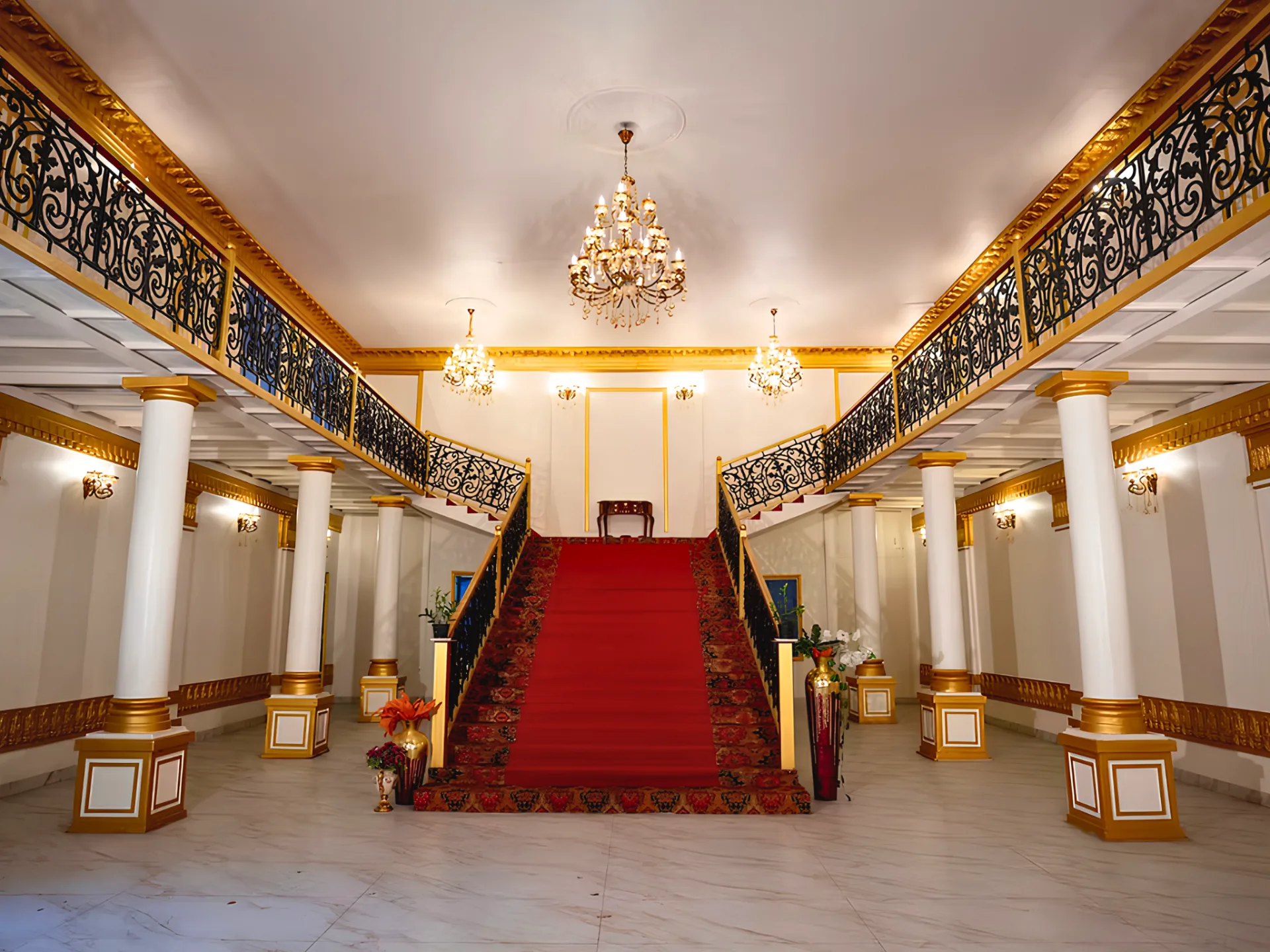
Some studios arrive with a complete opinion. The walls have a colour story. The furniture implies an era. A curved doorway, patterned floor or recognisable sofa can settle the frame before the product enters it. That can save a day of building. It can also make the campaign look borrowed.
Choose a styled studio when its visual language supports the brand assets you already have. Test the room against the product, wardrobe and typography before you book. If all three need to be subdued, recoloured or hidden to survive the set, the venue is not saving art-direction work. It is creating a negotiation in every frame.
A styled set is never only a backdrop
A white sweep tries to disappear. A styled room does the opposite. It contributes colour, texture, scale, period and an implied kind of life.
A dark timber room may suggest weight and ceremony. A tiled kitchen brings domestic action into the frame. Chrome, glass and hard light can make a product feel technical before the copy says anything. These are creative choices, even when the venue owner made them long before your brief existed.
Start by writing one sentence about the story the room seems to tell. Keep it descriptive, not grand:
- A lived-in dining room where objects are handled, not displayed.
- A sharp graphic space built for contrast and clean silhouettes.
- A soft domestic corner with visible texture and close camera distances.
- A theatrical set where the room will remain part of the subject.
If that sentence belongs in the campaign brief, the venue is doing useful work. If it contradicts the brief, no amount of wishful framing will make the conflict disappear.
Run the Three-Asset Brand-Fit Test
Build one rough frame before you fall in love with the listing gallery. Put three real brand assets against a photograph of the proposed set.
1. The product
Use the actual product, pack or hero object at realistic scale. Do not judge from a logo alone. Look at colour separation, reflections, material contrast and the amount of visual space the object needs.
A small neutral pack may vanish against a busy shelf. A reflective object may pick up every coloured surface outside the camera frame. A fashion silhouette may need more clean edge than the room provides.
Ask: does the room make the product easier to see, understand or desire? If the first task in post-production will be separating the product from the set, the answer may be no.
2. The wardrobe or human palette
Add one likely outfit, skin-tone range or material swatch. A room that flatters the product can still fight the people presenting it. Check whether wardrobe and wall colours merge, whether a patterned surface competes with fabric, and whether furniture height suits the planned posture.
This is also where scale becomes obvious. A dramatic chair may work as an empty prop but distort the body language of an interview or demonstration.
3. The type treatment
Place the campaign's likely headline, caption style or graphic device over the frame. Styled locations often leave less quiet space for typography. If every usable text area covers an important architectural feature, decide which one the campaign needs more.
Type also exposes tone. A highly geometric treatment may make an ornate room feel intentionally tense or simply mismatched. The test does not demand harmony. It asks whether the tension is chosen.
Score each asset as supported, workable with one change or fighting the set. A venue with two fighting scores needs a stronger reason than “it photographs well.”
Calculate what the studio truly replaces
A styled studio can reduce production work, but only count the work it actually removes.
List the set elements you would otherwise need:
- Wall treatment or backdrop.
- Hero furniture.
- Surface for the product.
- Practical lighting visible in frame.
- Props that establish place or activity.
- Dressing labour and setup time.
- Storage and removal after the shoot.
Then mark each item as usable, movable with permission, or unsuitable. A room full of furniture does not replace a set build if you must remove most of it and bring your own pieces.
The useful comparison is not styled studio versus empty studio by hourly price. Compare the complete shoot: venue time, transport, set hire, props, dressing, crew labour, reset and any restoration required. Use current host terms and supplier quotes rather than assumptions.
Check whether the set has become the campaign
Recognisable rooms carry a specific risk. The audience may have seen the same arch, sofa or wall treatment in another brand's work. Familiarity is not automatically a problem. It becomes one when the venue's signature detail attracts more recognition than the product.
Review recent public work photographed in the space if the host can share it. Do not ask whether the set has been used before. Ask which angles and features appear most often.
Then find ways to create difference without damaging or disguising the room:
- Change the camera height and distance, not only the lens.
- Use a less familiar orientation of the room.
- Build the frame around an activity instead of a hero corner.
- Introduce one strong brand-owned surface or object.
- Crop architectural signatures when they add recognition but not meaning.
- Let movement, shadow or people carry the composition.
If the brief relies on the venue's most recognisable angle, accept that other campaigns may share some visual DNA. The trade-off is speed and established production value in exchange for less ownership of the setting.
Ask what may move, attach and change
Do not infer modification rules from photographs. A cushion may move while a lamp may not. A freestanding backdrop may be permitted while tape on a painted wall is not.
Send the host a change list with four headings:
- Move: furniture, rugs, plants, props and curtains.
- Add: freestanding flats, floor protection, temporary lighting and product displays.
- Attach: tape, clamps, suction mounts, removable vinyl or nothing at all.
- Restore: who resets the room, what condition is expected and how much time is reserved.
Ask where removed items can be stored. Moving a sofa into the only crew holding area solves one frame and breaks the working day.
If the studio has several looks, confirm whether your booking includes all of them and whether another crew can use an adjacent set at the same time. The Four-Layer Privacy Check is useful when an unreleased product or closed set is involved.
Make a pre-book moodboard that can fail
A moodboard should test the room, not persuade everyone to approve it. Use this five-frame sequence:
- Frame 1: untouched venue photograph with the intended camera direction marked.
- Frame 2: product at approximate scale.
- Frame 3: product and wardrobe together.
- Frame 4: headline or graphic treatment in the usable negative space.
- Frame 5: the same composition with the one permitted change you expect to make.
Under each frame, write the unresolved technical question: window direction, practical power, reflection, movable prop, camera distance or storage. A beautiful moodboard with no questions is a sales document. A useful one tells production what to verify.
Know when the simpler room is better
Choose a more neutral studio when the campaign needs several visual worlds, strict colour control, heavy compositing or a set that the brand must own. Choose the styled room when its existing choices are part of the idea and the time saved is real.
There is a middle path. A simple space with one strong surface can give the art team control without requiring a complete build. Read ALTR's guide to giving a blank wall a clear production job before assuming a plain room offers less.
When you compare styled studios for a content shoot, take the Three-Asset Brand-Fit Test with you. The best set is not the one with the most finished corners. It is the one that leaves enough room for the product, people and brand to become the reason the frame exists.