Private Venue Does Not Always Mean Private Building
A four-layer check for exclusivity, sightlines, sound and access, so you can tell what a private booking actually protects before you pay.
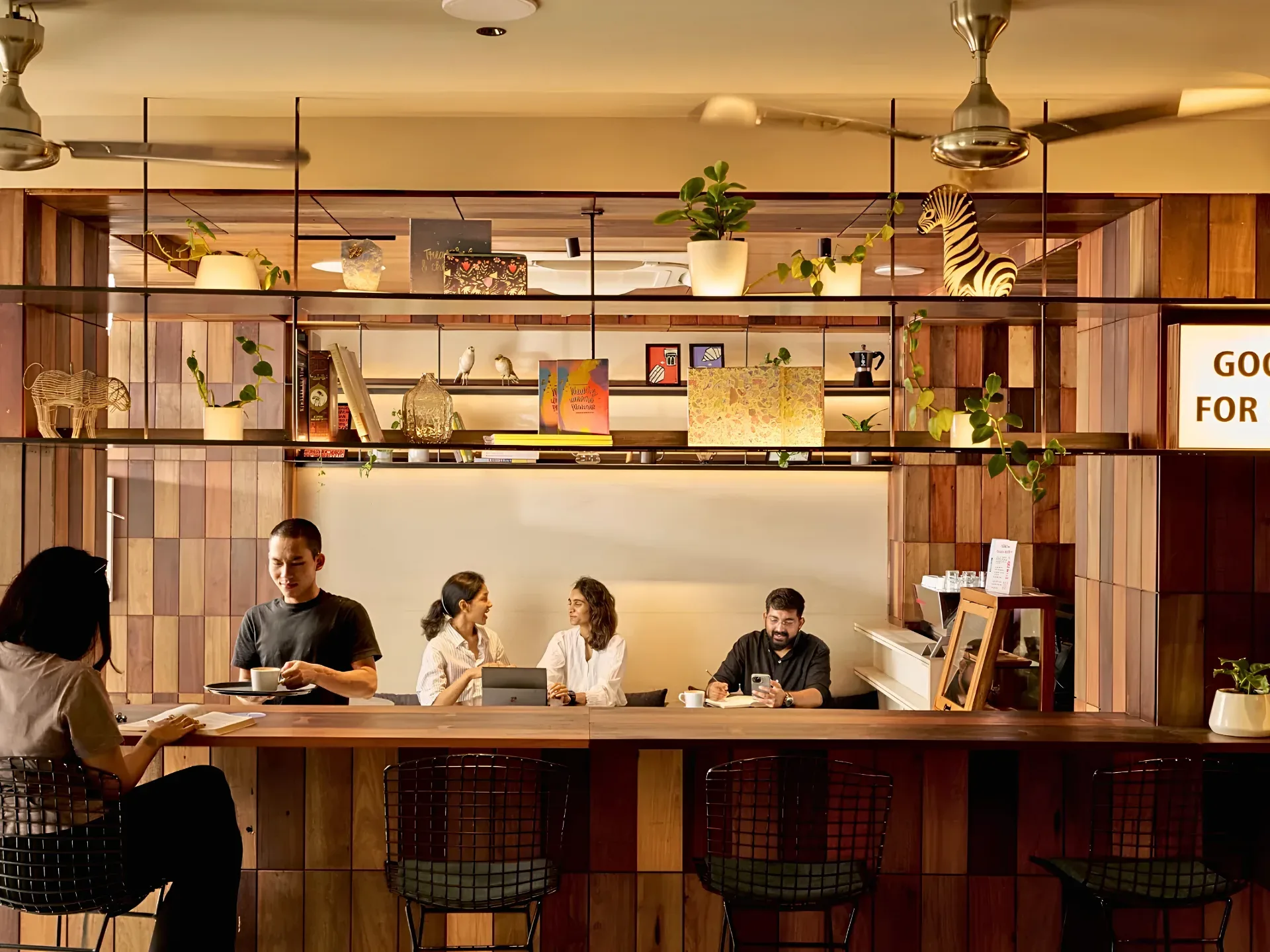
A room can be yours for the evening while the corridor outside remains busy. The washroom may be shared. Staff may cross the room to reach a store. Music from the next floor may travel through a service shaft. Each detail changes what “private” means for your plan.
Treat privacy as four separate conditions: exclusive use, visual separation, acoustic separation and controlled access. Decide which ones your brief needs, then ask the host to describe every shared edge. A surprise dinner may only need controlled arrival. A confidential meeting or recorded conversation may need all four.
Start with the Four-Layer Privacy Check
The word private is too broad to carry a booking decision. Break it into four questions that can be answered in plain language.
1. Is your group the only group using the booked area?
Exclusive use means another customer will not use the same room during your booking. It does not automatically mean you have the whole building, floor, terrace or compound.
Ask the host to mark the exact boundary of your booking. If the listing shows several connected spaces, confirm which ones are included. Find out whether staff need to enter for service, cleaning, utilities or access to another area.
For an unreleased product demonstration, an open service route could expose the setup too soon.
2. Can people outside the booking see in?
Visual privacy depends on sightlines, not doors. Glass partitions, open courtyards, balconies, street-facing windows and shared reception areas can all make a room visible while keeping it physically separate.
Trace the route from the building entrance to the room. Ask what another visitor can see from each point. If discretion matters, check windows after dark as well as during the day. Interior lighting can turn reflective glass into a clear view from outside.
Screens and curtains can help, but they also affect light and ventilation. Confirm what the host permits.
3. Can people outside the booking hear in?
Acoustic privacy is different from a room that merely feels quiet. A closed door may reduce corridor noise without preventing speech from travelling through it. Hard surfaces can make a low conversation intelligible farther away than expected.
For confidential work, ask whether speech can be heard in the nearest corridor, washroom, staircase or neighbouring room. For a recording, listen for the reverse problem too: lifts, kitchen equipment, traffic, staff radios, music and doors may enter the track.
Do not ask only, “Is it soundproof?” Ask the more useful question: “What can usually be heard in this room, and where can conversation from this room be heard?” If audio is central, arrange a site visit at a comparable time of day.
4. Who can reach the room?
Controlled access is about people, timing and responsibility. A lockable door helps, but an invite-only launch also needs someone to recognise guests, handle early arrivals and stop casual visitors following the group inside.
Ask who controls the main entrance, whether reception has a guest list, and how vendors enter. Confirm what happens if a guest arrives late. If the event is a surprise, decide where invitees wait without seeing the person or setup too soon.
Trace every shared edge
Privacy failures tend to happen at boundaries, not in the centre of the room. Walk through the booking as if you were five different people:
- A guest arriving 20 minutes early.
- A vendor carrying equipment through the building.
- A member of staff reaching a store or service area.
- A visitor booked into another room.
- A neighbour using a shared entrance or washroom.
For each person, note where their route meets yours. The useful output is not a vague risk score. It is a short list of intersections you can accept, schedule around or ask the host to change.
A shared washroom may be completely workable for a private dinner. It may be a problem for a closed-door interview with a recognisable guest. The same physical setup carries a different risk because the brief is different.
Match privacy to what could go wrong
Do not pay for isolation you do not need. Do not accept ambiguity where a breach would be costly.
Confidential meeting
Prioritise acoustic separation and controlled access. Confirm who can enter, whether staff need to cross the room and where calls or breakout conversations can happen. If documents will remain on tables during breaks, ask whether the room can be locked.
Recorded conversation
Prioritise unwanted sound, interruptions and visual control. A shared building can still work if the recording window is scheduled away from noisy operations and the door can be managed. Read ALTR's guide to choosing a room for the conversation you want when the format is discussion-led.
Ticketed or invite-only gathering
Prioritise the arrival route. Decide who checks names, where queues form and how someone without an invitation is handled. The venue can provide a door, but the organiser still owns the guest-list process.
Surprise gathering
Prioritise sightlines and timing. Use separate arrival instructions for the guest of honour and everyone else. Ask whether another booking, building directory or reception conversation could reveal the plan.
Practical privacy without turning the room into a fortress
Many privacy gaps can be managed with small, agreed changes:
- Schedule around overlap. Move a recording or reveal away from another group's arrival, kitchen prep or building delivery.
- Name the boundary. Put discreet signs at the points where another visitor could wander into the booking.
- Assign the door. Give one person responsibility for arrivals and late guests instead of assuming reception will do it.
- Shape the sightline. Reposition the main activity, add a permitted freestanding screen or close an agreed curtain.
- Manage sound at the source. Lower music near a shared wall, move a speaker away from a door or place confidential discussion farther from circulation.
- Write down staff access. Agree when service, cleaning and replenishment happen, especially during a recording or presentation.
Each measure has a trade-off. Curtains change daylight. A closed door can reduce airflow. Restricting staff access can slow food service. Privacy planning works when it protects the important moment without quietly breaking the rest of the event.
Send these questions before you book
Copy the questions that matter to your brief:
- Which exact rooms or zones are exclusive to our booking?
- What other guests, staff or residents will use the building at the same time?
- Are the entrance, reception, lift, staircase or washrooms shared?
- Can someone outside the room see the main setup through glass, windows or an open corridor?
- What sound normally enters the room at our proposed time?
- Can ordinary conversation be heard from the nearest shared area?
- Who can enter the booked area, and can the door be controlled?
- Will staff or vendors need to cross the room during the programme?
- Can early and late arrivals wait without interrupting or revealing the event?
- What screens, curtains, signs or sound measures may we add?
Ask for written answers where privacy is a condition of the booking. Photographs show surfaces. They do not prove who can enter, see or hear.
Turn the answers into a privacy-first brief
Use one sentence that names the consequence, not only the preference:
We need exclusive use of the main room from setup to pack-down, speech that is not intelligible from shared areas, and one controlled guest entrance because the meeting content is confidential.
That sentence gives a host something concrete to confirm. It also lets you compare spaces fairly. One venue may offer complete visual control but share a washroom. Another may sit inside a busy building but have a separate entrance and better acoustic separation.
If the brief is still changing, apply the reversible venue decision test before you pay. A privacy plan is easier to adjust when furniture, screens and arrival routes are not fixed too early.
When you are ready to shortlist, browse ALTR spaces with privacy in mind. Treat the search as a starting point, then send the Four-Layer Privacy Check to each host. The right private venue is not the one with the strongest label. It is the one whose shared edges fit what you are trying to protect.