What the Room Is Quietly Telling People to Do
A practical layout chooser for deciding where attention should sit, who can speak, how people move and what the room should do as discussion changes.
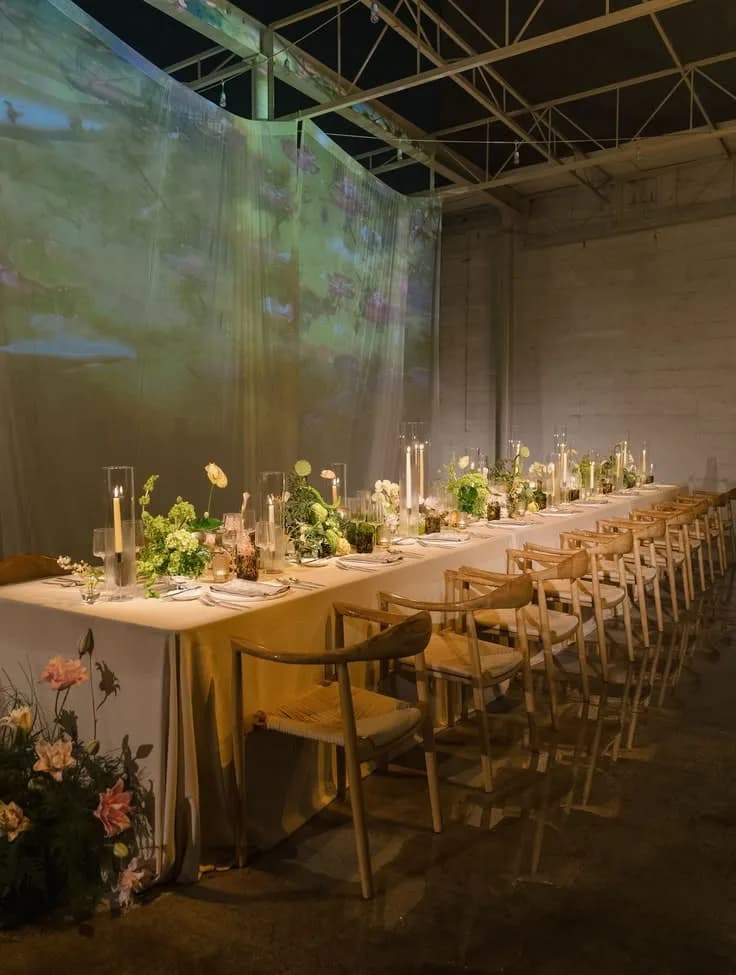
Put every chair in rows and the front of the room becomes important. Turn the chairs towards one another and people can see more faces, but they may also lose a clear place to focus. Add tables and hands have somewhere to work, though movement becomes harder. The furniture has made choices before the facilitator speaks.
Choose a room layout by deciding where attention should live and how often it should move. Rows support a shared focal point. A circle makes every participant visible. A long table gives work a common surface. Clusters support parallel conversation. None guarantees participation. Facilitation, group norms, sound and the task still matter.
Treat layout as a prompt, not a promise
It is tempting to say circles create conversation and rows suppress it. Research does not support such a simple rule. A field experiment with student teachers compared circle and row seating and found that interaction patterns varied with the subject and facilitator. In that setting, speech rate was higher in rows, contrary to an easy assumption. The authors also found that facilitator involvement mattered. You can read the study in the Journal of Experimental Education.
The practical lesson is useful: the room influences behaviour, but it does not determine it. Treat every layout claim as a design hypothesis to test against your group and programme.
Ask four questions:
- Who or what needs most attention during this block?
- Who needs to speak to whom?
- What must people see, hold or make?
- How soon will the interaction pattern change?
The answers lead to a workable arrangement more reliably than a label such as classroom, boardroom or theatre.
Read the default behaviour of five layouts
Rows
Rows point bodies towards one focal area. They suit a demonstration, screening, briefing or talk where many people need a clear view in the same direction.
The trade-off is peer visibility. People at opposite ends may not see one another, and turning into small groups can create noise and furniture movement. If discussion follows a talk, leave enough space for chairs to rotate or plan a deliberate reset.
Circle or open oval
A circle makes faces visible and removes an obvious front. It can support a conversation where contributions move across the group.
It also exposes every participant. Someone who wants to observe before speaking has fewer edges to use. A large circle increases distance across the room and can make low voices hard to hear. An open oval can preserve a shared screen or facilitator position without returning fully to rows.
Long table
A table creates a common working surface for notes, materials, food or prototypes. It can help a group focus on the work between them rather than perform towards a stage.
Attention is not equal everywhere. People at the ends sit in a different relationship to the group, and a wide table separates opposite sides. Check whether the leader needs the head position or whether it quietly reinforces the hierarchy the session is meant to question.
Clusters or pods
Small tables or chair groups support parallel work. They reduce the effort of switching into teams and give materials a local home.
They can fragment a whole-room conversation. Some participants sit with their backs to the focal point, and instructions compete with group chatter. Use clusters when small-group work is a substantial part of the programme, not as a decorative default.
Standing room
Standing can shorten transitions and make movement between people easier. It works for arrivals, quick reviews, exhibits and brief energetic exchanges.
It is not a neutral accessibility choice and does not suit long concentration by default. Provide varied seating and places to rest. Ask guests what they need rather than assuming everyone can or wants to stand.
Decide where attention should live
Use the ALTR Conversation Layout Chooser. Pick the sentence that best describes each programme block.
Attention belongs to one speaker or screen
Begin with rows, a shallow fan or an open oval. Protect sightlines and clear sound before adding intimacy through styling.
Attention belongs to every participant
Begin with a circle, oval or shallow U. Keep the group small enough for faces and voices to remain available. Create an edge seat or nearby pause space for anyone who needs less exposure.
Attention belongs to the work
Begin with a shared table, wall, floor area or distributed stations. Put materials where they can be reached without interrupting another group.
Attention needs to move repeatedly
Begin with light, movable furniture and a clear reset route. Avoid a layout whose strongest feature is difficult to undo. The reversible venue decision test helps when the programme is not settled.
Use distance intentionally
Distance changes ordinary behaviour. If chairs sit far apart, speaking may become more formal or louder. If they are too close, people may protect personal space rather than engage.
Test the room at the real group size. Sit in the farthest two positions and speak at a comfortable level. Check whether air conditioning, street noise or another activity masks the conversation. Then sit in the most exposed position and ask whether it feels like a participant seat or an accidental stage.
The same check applies to a long table. Can someone enter the conversation from the middle without raising their voice? Can a person at the end hear a quiet contributor? There is no universal ideal distance. The right distance serves the task and the people present.
Design the edges before filling the centre
Good discussion spaces have places for people who are not participating in the same way at the same moment.
Plan for:
- A late arrival who needs to enter without crossing the speaker's view.
- An observer, interpreter or note-taker.
- A participant who needs a pause without leaving the event entirely.
- Mobility aids and varied seating needs.
- Bags, water and materials that otherwise colonise circulation.
- A facilitator who needs to move between whole-group and small-group work.
Edges can be active. A side wall can hold work-in-progress. A bench can become a quieter listening position. A second small zone can take a difficult conversation out of the main circle.
Do not treat these as leftover areas. If the room has no usable edge, the centre must carry every need.
Change the room when the programme changes
A workshop or community gathering may need several behaviours in one session. Keep the reset small and purposeful.
For example:
- Begin in a shallow U for a shared introduction.
- Turn every second chair to create pairs.
- Move to wall space for review.
- Return to one open circle for decisions.
This works only when the venue permits movement, storage is clear and the schedule includes the reset. Assign one person to call the change and decide whether participants or staff move the furniture.
A ten-minute reset can refresh attention. Three complicated resets can consume the session. Keep a layout when the gain from changing it is smaller than the interruption.
Send a behaviour-first room brief
Try this:
We need a clear shared focal point for 20 minutes, groups of four for most of the session, and one final whole-room discussion. Participants will write and handle materials. We need movable seating, enough table or wall surface for group work, a quiet edge seat, and a reset that can happen inside ten minutes.
The brief does not demand a fashionable setup. It tells a host what the room must help people do. Use the workshop venue scorecard when the layout must support several learning modes, or the four-mode meetup plan when the room must move between shared focus and informal conversation.
When you compare spaces for a meetup or discussion on ALTR, ask for photographs or a simple plan in the intended layout. Choose the room whose default behaviour is closest to the longest, most important block. Then use facilitation, not furniture mythology, to invite the conversation you want.