Design a Meetup People Can Actually Meet At
Plan arrival, shared focus, small conversations and lingering so your meetup builds connection instead of becoming another lecture.
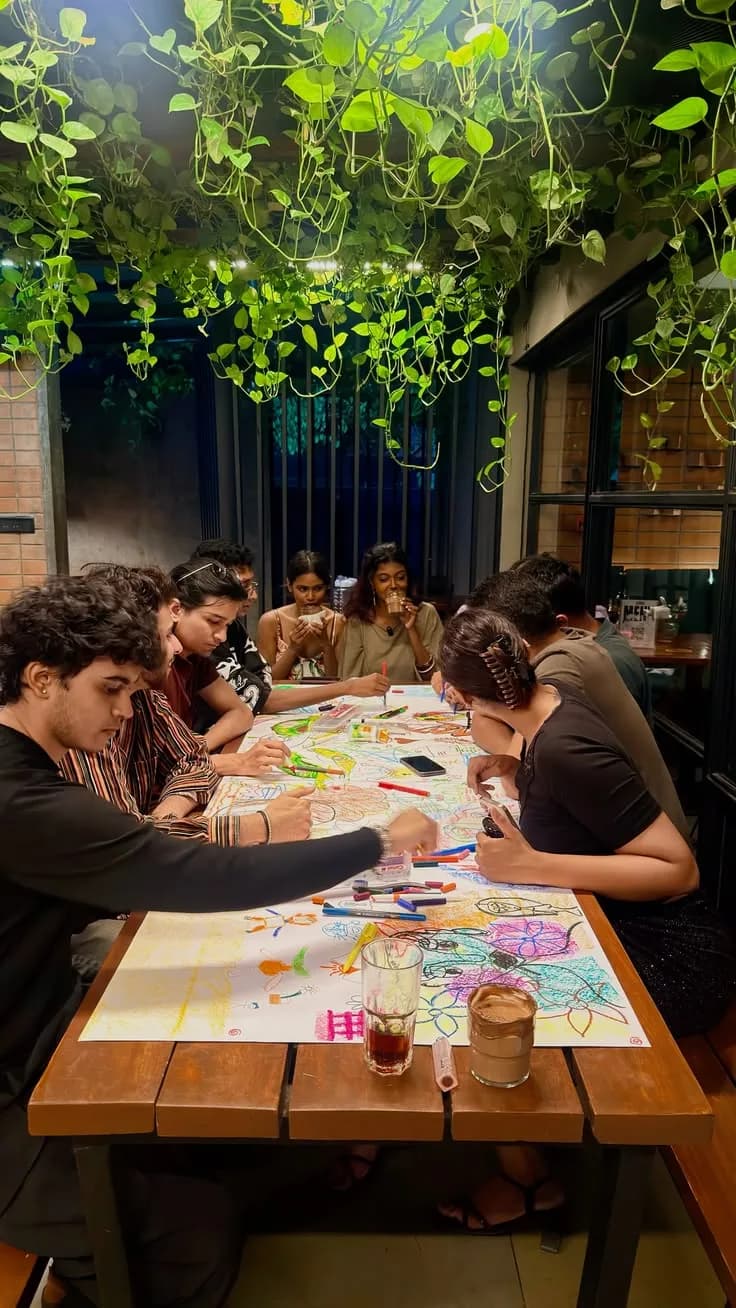
If every chair faces one speaker for the whole evening, you have designed a talk, not a meetup. A community gathering needs at least four modes: arrival, shared focus, small conversation and time to linger. Choose a room that can shift between them without a long furniture reset or a queue cutting through the audience.
Decide what should happen after the talk
“Networking” is too vague to shape a room. Name the useful outcome. Should a first-time member meet two people? Should practitioners exchange a working method? Should someone leave with an answer to a specific problem?
That outcome changes the setup. A peer-help session needs small groups and enough quiet to hear. A member welcome needs an easy way to identify hosts and newcomers. A talk with informal conversation afterwards needs edges where people can stand without blocking pack-down.
Write one sentence before choosing the venue:
By the end of the meetup, a guest should have heard one useful idea and spoken to at least one person about their own work.
Treat the number as a design prompt, not a guaranteed result. It reminds the organiser to reserve time and space for both listening and speaking.
Give the evening four modes
Arrival
Arrival should answer three questions quickly: am I in the right place, what should I do now, and where can I stand without feeling exposed?
Place registration where it can see the entrance without forming a barrier across it. Give early guests a small task, display or conversation prompt. If name tags matter, make them readable at a normal conversation distance and give people a moment to write them.
Shared focus
For a talk, everyone needs a clear enough view and speech they can understand. Check the weakest seat, not the front row. If the room is wider than it is deep, a small change in speaker position may improve sightlines more than a larger screen.
Keep the formal section proportionate to the community goal. A full hour of presentation leaves less energy and time for member exchange.
Small conversation
People need a clear transition from audience to participant. Use a specific prompt, move chairs into small groups or invite people to gather around a topic marker. Do not rely on “now network” as an instruction.
The room must support simultaneous speech. Hard surfaces, loud background music or a sound system left running can make several conversations tiring. Visit at a comparable occupancy if possible, or run a short sound check with several people speaking.
Lingering
Some useful conversations begin after the programme ends. Decide how long the venue can support them and which area can remain open while equipment is packed. Tell guests the final departure time clearly.
Food and drink can give lingering a natural centre. Place them where a queue will not cut through the speaker area or block the entrance.
Choose a room that can change mode
A venue does not need four separate rooms. It needs enough flexibility for four behaviours.
Look for:
- A visible but non-blocking welcome point
- Seating that can turn or move without a full rebuild
- A focused presentation area with useful sightlines
- Edges, tables or pockets for smaller conversations
- A food position outside the main circulation line
- Storage for bags, cases and unused chairs
- A final area that can remain social during pack-down
Ask who may move furniture, when it must return and where spare pieces go. A chair stack left beside the stage can quietly reduce the room's usable area.
Remove the common points of social friction
First-time guests often arrive alone and do not know the room's unwritten rules. Make the welcome legible. Name the host. Explain when the formal programme begins. Give people a reason to speak that is more useful than asking what they do.
Use prompts with an answerable scale
“What are you working on?” can feel broad. A tighter prompt gives people a starting edge:
- What tool saved you time this month?
- Which part of this topic is still unclear?
- What did you try that did not work?
- What could someone in this room help you test?
Choose one that fits the community. Do not force personal disclosure or turn every interaction into a performance.
Protect speech from the room
Background music can help an empty room feel occupied, then compete once conversations start. Turn it down or off during discussion. Check air conditioning, kitchen noise and other activity at the venue.
For amplified speech, ask what system is included, who operates it and how a question from the audience will be heard. A hand-held microphone may require a person to move through the room. Build that into the format.
A 90-minute meetup plan
Use this as an original starting pattern and adjust it to your community.
- 0 to 15 minutes, arrival: Hosts greet people, registration stays quick, one visible prompt gives early guests a place to begin.
- 15 to 25 minutes, orientation: Welcome, purpose, room notes and a short pair introduction.
- 25 to 50 minutes, shared focus: One talk, demonstration or moderated conversation.
- 50 to 70 minutes, small exchange: Groups respond to one specific question and capture one useful point.
- 70 to 80 minutes, return: Selected groups share briefly. The host names any next step.
- 80 to 90 minutes, close: Formal ending, clear departure time and invitation to continue in the designated social area.
If the venue booking allows, add informal time after the 90 minutes rather than pretending the close and the last conversation happen at once.
Run the empty-room test
Before confirming, stand at the entrance, weakest audience seat, speaker position and food point. At each spot, ask what a guest can see, hear and do next. Then imagine all four modes without moving major equipment. Use the last-100-metres arrival check for the first mode and the conversation layout chooser for the small-group mode.
Browse ALTR spaces listed for meetups, then send the host your expected layout and running order. Confirm access time, included seating, sound, food rules, furniture return and final departure. Before choosing, stand where a newcomer arrives and ask: what can they see, hear and do without waiting for an introduction?