Plan the Room Between Courses
Choose a private dinner venue around arrival, conversation, service routes, toasts and the way the evening moves after dessert.
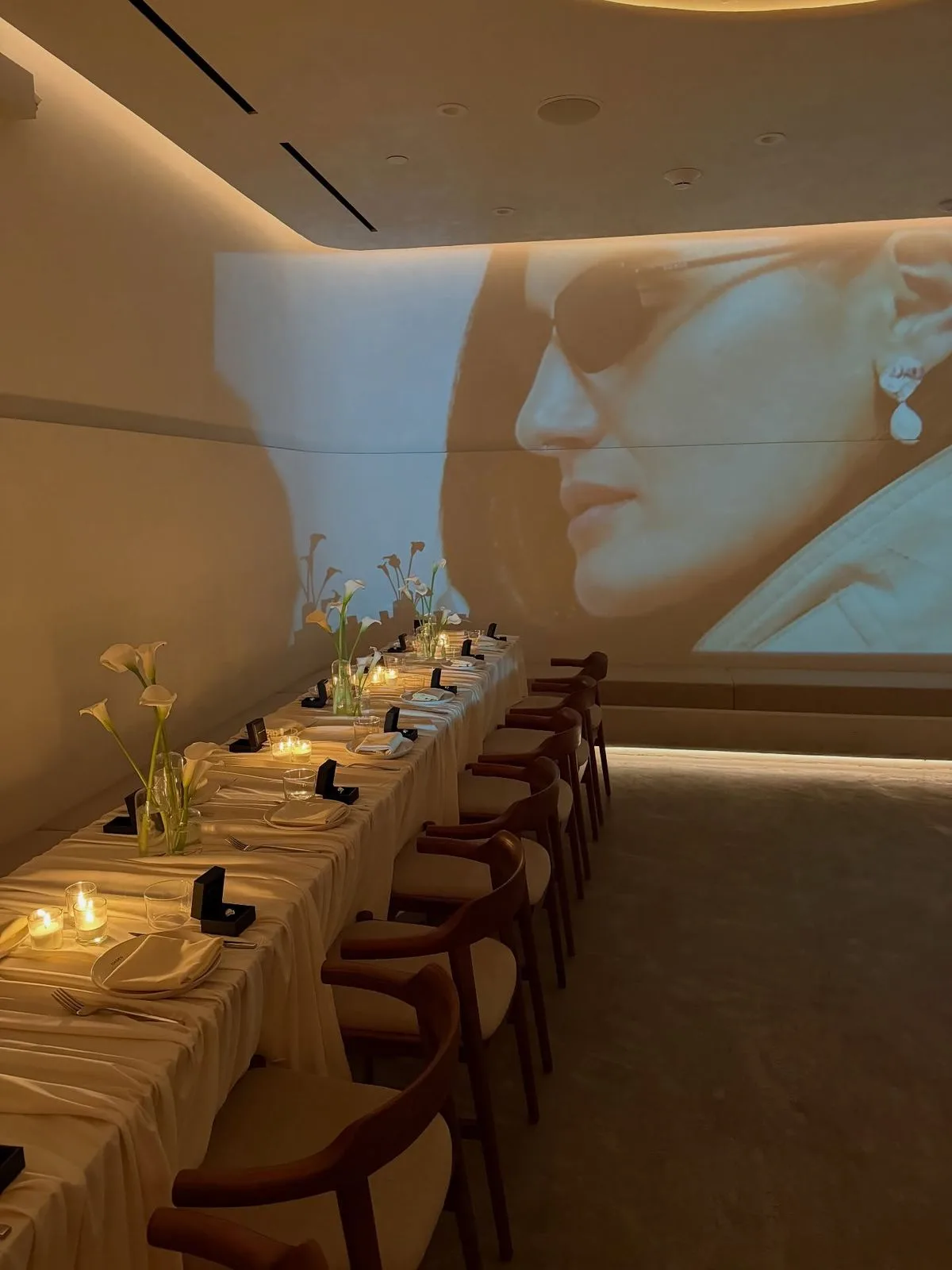
For a private dinner, choose the room around the evening between the plates. Guests need to arrive without crowding the table, hear the person opposite them, let service move without interruption and find a natural place to continue after dessert. The menu matters. So do the distances, thresholds and service paths that determine how the meal feels.
Start with the social shape
Before searching for a private dinner venue, decide how the group should relate to one another. A single long table creates one visible gathering but can divide conversation into small pockets. Several round or square tables make service and local conversation easier, while asking the host to create moments that connect the whole room.
One table
One table suits a group with a shared reason to be there. Check the distance across it, the width left for chairs and service, and whether guests can see the person speaking. A table that photographs well when empty may feel crowded after place settings, glassware, flowers and serving pieces arrive.
Ask for the intended table dimensions and chair count. If the venue cannot provide them, mark the layout during a site visit.
Smaller tables
Smaller tables can help guests speak without raising their voices. They also create a hosting question: will people remain with the same group all evening, or will the programme give them a reason to mix?
If a toast, performance or presentation is planned, test the view from every table. Do not place a guest behind a column or service station and expect amplification to fix the feeling of exclusion.
A moving supper
Some dinners move through a courtyard, terrace, bar or second room. The change can reset energy, but every move needs enough time, a clear cue and a plan for guests who move more slowly. If an outdoor area is essential, agree on an indoor version of the same moment.
Design the first 20 minutes
The table should not be the only place to stand when guests arrive. A small holding area lets people greet one another while the host handles late arrivals and the service team protects the first course.
Avoid a threshold bottleneck
Walk the path from vehicle drop-off or building entrance to the gathering. Ask whether another operation shares security, reception, lift or corridor. Give guests one precise entrance instruction and a current contact.
Inside, keep the welcome drink, coat or bag point and seating check away from the doorway. If people must verify names, do it without making invited guests feel processed.
Decide how seating happens
Assigned seating can reduce hesitation and shape conversation. Open seating feels relaxed but can leave late guests with awkward gaps. Choose deliberately.
For assigned places, make names readable before someone pulls out a chair. For open seating, have the host guide the final few guests so the room does not fragment into tightly packed and nearly empty sections.
Give service a hidden path
Map the route from kitchen or holding area to every seat, then map a separate return path for cleared plates. If a toast or performance matters, agree when clearing pauses so staff movement and crockery do not compete with it.
Ask:
- Where does food arrive and wait?
- Is it plated, shared or passed?
- Which doors, corridors or aisles will staff use?
- Can staff reach every guest without asking others to stand?
- Where do used plates, bottles and waste go?
- Who clears the room after the final course?
A beautiful sideboard may be useful for service or may become cluttered with packaging and used glassware. Assign it a job before the evening.
If the venue uses an in-house kitchen, ask the team to describe its normal service rhythm for a group like yours. If an outside caterer is allowed, bring them into the venue conversation early. Permission to cater does not answer questions about heat, power, water, holding or cleanup.
Protect conversation
A private dinner does not require silence. It does require a room where guests can speak without competing with music, kitchen activity or another party.
Visit at a comparable operating time if you can. Listen with the air conditioning and normal service running. Ask what else may happen during your booking and what remains shared.
For music, decide whether it supports arrival, sits under dinner or becomes part of the programme. Confirm the permitted setup and hours with the host. Keep the volume below the point where the nearest table must lean in for every sentence.
Use the room to change pace
A long meal benefits from small shifts. They need not be theatrical.
Toasts
Choose where the speaker will stand and whether everyone can hear. For a smaller group, asking service to pause may be enough. For a larger or acoustically active room, test a microphone and name the person who will pass or operate it.
Keep service timing and speeches in the same running order. A heartfelt toast will struggle against plates arriving at six tables.
After dessert
Decide what you want guests to do next. They may remain at the table, move to softer seating, step into a courtyard or leave soon after. Each choice affects booking time and staffing.
If the venue needs the table cleared at a fixed hour, tell guests before the evening reaches that point. If conversation can continue elsewhere, make the route obvious and ensure that area is included in the booking.
Choose atmosphere that reduces production
A restaurant gives you service, an established setting and a familiar guest script. A heritage room or courtyard may carry more visual character while requiring a more detailed food and weather plan. A flexible event space gives the host greater control over table, light and programme, with more vendors to coordinate.
Choose the setting whose existing character belongs to the dinner. Decoration should clarify the table and occasion, not fight the architecture or create a long installation window.
The between-courses room test
Use this five-scene asset on a site visit:
- Arrival: Stand where the third and tenth guest will wait.
- First course: Sit in the least favourable chair and listen.
- Service: Walk a plate from the kitchen or holding point to the farthest seat.
- Toast: Stand where the speaker will be and check every sightline.
- After dessert: Move to the next planned area, or test how the table supports a longer close.
Write one unresolved question after each scene. Those five questions are more useful than a broad request for the venue's event package.
Confirm the evening in one message
Put guest count, seating shape, arrival window, menu model, dietary process, service team, music, speeches, outside items, exclusivity, closing time and final handover in writing. Ask the host to separate what is included, available at extra cost and not permitted. Use the restaurant-versus-empty-room comparison to choose the operating model, then send the outside-catering questions if food comes from another team. For a heritage setting, read the light-touch production check before adding decor.
Explore spaces listed for celebrations. If a heritage setting is part of the brief, review Kathiwada City House as one live option and confirm its current food, timing, access and exclusivity details directly. Before paying, walk one plate to the farthest seat and one guest from arrival to the place they can linger after dessert.