Restaurant or Empty Room? Choose the Work You Want to Take On
Compare a restaurant and a flexible event space by service, control, food rules and coordination work, not only by how each room looks.
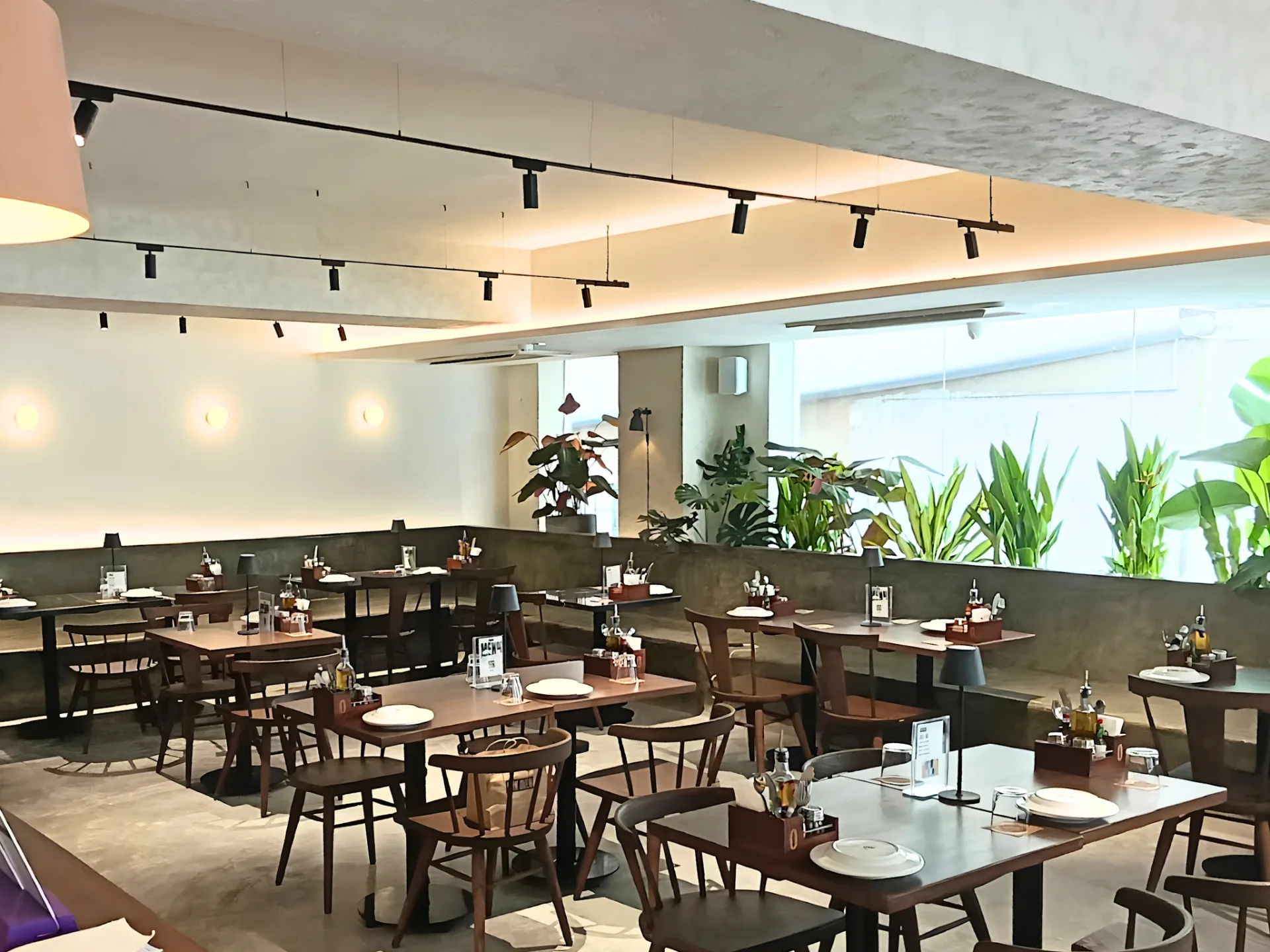
Choose a restaurant when you want the venue to carry food, service and much of the guest care. Choose a flexible event space when the room must change around your programme and you are willing to coordinate the parts. One option reduces production work. The other gives you more control. Your appetite for that work is a better guide than decor alone.
Two spaces, two kinds of labour
A restaurant arrives with an operating system. It has a kitchen, a menu, service staff, tables, a clearing routine and a way to handle a busy room. Those systems place limits on what can change, but they also remove several calls from your planning list.
A flexible venue offers a different bargain. You may be able to move furniture, bring a caterer, build a display or change the running order. Each freedom creates a decision. Someone must own the floor plan, vendor timing, equipment, food service and return of the room.
The choice is not convenience versus creativity. Plenty of restaurants allow thoughtful private programmes, and plenty of flexible spaces come with operational support. The useful question is: which work is already solved, and which work will remain yours?
Food and beverage is the first fork
Food determines more of the venue decision than many organisers expect. It affects access, furniture, power, water, staff circulation, waste and the final hour of the booking.
What a restaurant can solve
An in-house menu gives one team responsibility for preparation, service and clearing. Ask the restaurant to confirm its service route and the guest count it can support in your intended format. If the event is primarily a meal, this operating coherence matters.
Ask about:
- Set menus, ordering format and dietary requests
- Minimum spend or room-hire structure
- Exclusive use versus a section within normal service
- Timing for speeches, presentations or music
- Cake, alcohol and outside food rules
- Service charge, taxes and the final payment process
Do not assume a private table means a private room. Ask what other service continues around your group and whether guests share the entrance, washrooms or bar.
What a flexible venue leaves open
An outside caterer can give you more choice, but permission is only the first check. The team may need preparation space, clean water, power, cold storage, a safe holding area and a route that does not cross the guest entrance.
Confirm who supplies serving staff, crockery, tables, linen, bins and cleaning. A room that accepts delivered food may not support live preparation. A kitchenette may be intended for tea and plating rather than full service. Ask what it can actually handle.
Compare control over the room
Restaurants protect their normal operation and visual identity. Fixed tables, open kitchens, bar service and brand signage may be part of the setting. This can be an advantage when you want the atmosphere without building it yourself.
A flexible space usually gives the programme more influence over the room. You might create a stage, product display, circle of chairs or exhibition route. Before treating that freedom as unlimited, ask about wall fixings, furniture movement, sound, outside vendors, candles, cleaning and restoration.
The control test
For every change you want, mark one of four answers:
- Already works: The room supports it in the normal setup.
- Host can change it: The venue team will handle it.
- You can change it: Your team or vendor may handle it under agreed rules.
- Cannot change: The condition is fixed.
Run this test for seating, lighting, music, branding, food, guest arrival and closing time. The venue with the most “already works” answers may deserve a higher rate because it removes labour and uncertainty.
Compare the guest experience
A restaurant gives guests a familiar script. They arrive, find the table, order or receive food, and remain within a service rhythm. This makes private dinners, informal celebrations and conversation-led gatherings easier to understand.
A flexible venue asks you to write the script. Where do guests pause when they enter? Who greets them? Where do they put bags? When does food appear? Does the room guide them towards a stage, display, table or conversation?
That control is valuable for launches, workshops, exhibitions and community formats. It also means an organiser must see the whole journey. A dramatic main room cannot compensate for an unclear entrance or a food queue that blocks the programme.
Match the operating model to the event
Private dinner
Start with the restaurant unless the tablescape, caterer or setting is central to the idea. In a flexible room, price every service item and ask who will clear the final plate.
Community meetup
A restaurant can work when conversation and food lead the evening. A flexible venue usually works better when everyone needs a clear view of a speaker, a screen or several breakout groups.
Product launch
Choose based on the demonstration. A food or hospitality product may belong naturally in a restaurant. A physical installation, staged reveal or hands-on trial may need the control of an open room.
Celebration
Choose the restaurant when you want to arrive as a host rather than a producer. Choose the flexible venue when music, performance, decoration or a particular service style carries the occasion.
Send different questions to each host
For a restaurant, ask:
- Is the area exclusive, and what remains shared?
- What menu and service formats are available?
- Can the room pause normal service for a speech or presentation?
- What may we bring from outside?
- When can guests arrive, and when must the group leave?
If the event centres on a meal, use the private-dinner room test to check arrival, service and conversation between courses. If an outside team will handle the food, send the venue the outside-catering questions before deciding that an open room gives you more freedom.
For a flexible venue, ask:
- Which furniture and staff are included?
- What does the food preparation area support?
- When can vendors load in and pack down?
- What may be fixed, moved or amplified?
- Who owns cleaning, waste and final handover?
The answers reveal the real booking. A restaurant sells a room inside a hospitality operation. A flexible venue sells time and control inside a set of host and building rules.
Compare hospitality-led and flexible spaces in Bangalore. Open a restaurant listing such as Brik Oven Indiranagar or Brine, then compare it with a flexible space such as TreeHouse. Reconfirm current food, exclusivity and timing rules with each host before choosing.