Let a Heritage Venue Be More Than a Backdrop
A restrained way to plan in a heritage setting: understand the building, ask what it can host, add freestanding elements and protect what is already there.
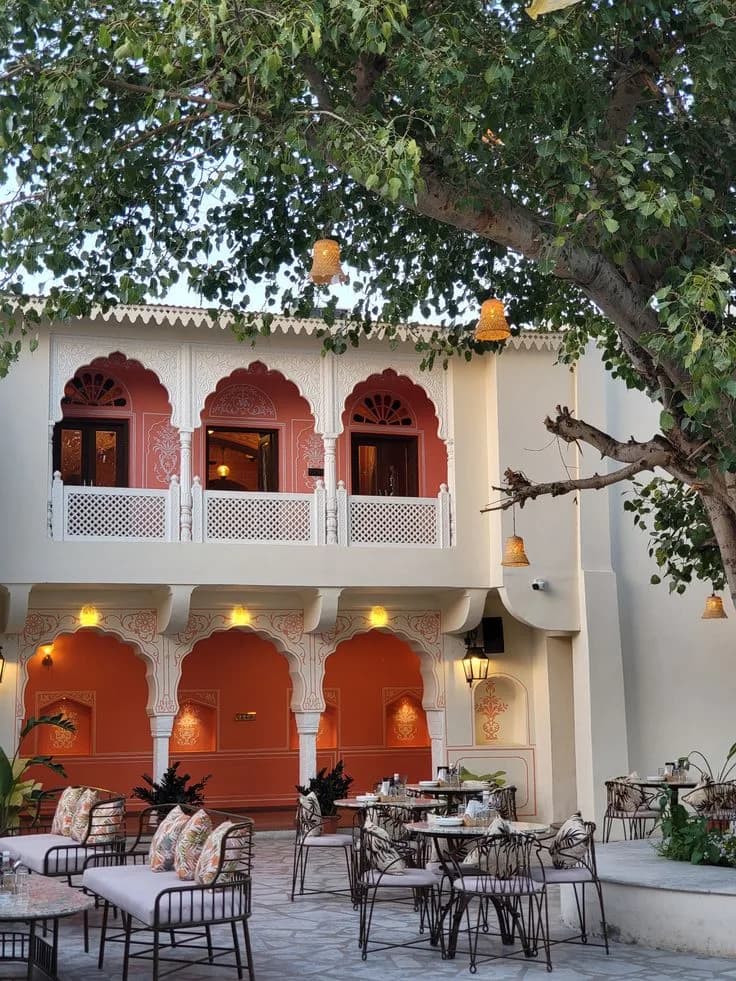
A heritage room does not need to be turned into a generic “heritage look.” The old floor, tall opening, worn threshold or sequence into a courtyard may already do more than added arches, brass props and borrowed motifs. Covering those details can remove the reason the venue was chosen.
Begin with what is physically and socially specific about the building, then design with additions that can be removed without harm. Different buildings can have different management rules and formal protections, so ask the host what applies here before anything is fixed, loaded, lit, covered or amplified.
Start with what is already doing the work
Before building a moodboard, make a plain inventory of the setting. Avoid period guesses and decorative labels. Record what you can see and what the host can verify:
- Materials underfoot and on walls.
- Ceiling height and room proportions.
- Door, window and courtyard sequence.
- Existing furniture or art that remains in place.
- Natural and installed light.
- Surfaces that look delicate, repaired or uneven.
- The route used by guests, staff and equipment.
Then ask which of these elements carries the atmosphere the event needs. A dinner may depend on the movement from courtyard to table. A workshop may use the scale and quiet of one room. A cultural programme may need the building's history explained by someone who knows it.
Do not make up the explanation. Ask the host for documented material, the preferred language for the building and any histories that should not be simplified into a caption.
Ask what the building can safely host
The venue's visual appeal does not prove that every event treatment is permitted or sensible. Send a production list rather than asking, “Can we decorate?”
Fixings and surfaces
Confirm what can touch walls, floors, doors, columns and ceilings. Ask about tape, hooks, clamps, nails, vinyl, cable covers, rugs, planters and freestanding frames separately. A product described as removable may still mark an old finish.
Treat the host's rule as the minimum. The production team should test its materials on an approved area and use floor or edge protection where required.
Load and movement
Ask about equipment weight, wheel size, door width, stairs, lift access and the route to the event area. Heavy scenic pieces can damage thresholds or floors even when they fit through the door.
Break large elements into parts when possible. Use people and equipment appropriate to the route. Do not use a vulnerable wall, balustrade or piece of furniture as a temporary support.
Light, heat and flame
Confirm rules for hot lights, candles, cooking, smoke effects and open flame. Check where power can be drawn and how cables may be routed. Historic fabric, old electrical systems and limited attachment points can change an otherwise ordinary lighting plan.
The answer may be no. Build the creative idea so it survives that answer.
Sound and occupancy
Ask the host for the permitted event format, areas, hours and sound conditions. Do not infer acoustic tolerance from thick walls or an enclosed courtyard. Building neighbours, management rules and fragile elements may matter more than the room's appearance.
The host and relevant authorities determine permitted use and capacity. An editorial guide cannot do that job.
Use the Light-Touch Production Check
For every production element, answer five questions.
- Purpose: What job does this element do for guests or the programme?
- Contact: What part of the building does it touch, cover, heat or load?
- Permission: Has the host approved the exact method in writing?
- Removal: Who takes it out, with what tools and inside which access window?
- Return: How will the team confirm the space is back in the agreed condition?
If the purpose is vague and the contact is high, remove the element. A decorative panel that hides a strong wall and needs adhesive carries cost without adding meaning.
This check borrows a useful conservation habit: assess the effect before committing to an intervention. UNESCO's impact-assessment toolkit for World Heritage contexts applies to a specific formal context, not automatically to a private event venue. Its broader discipline is still instructive. Temporary work deserves forethought when damage may not be temporary.
Add without concealing
Light-touch does not mean visually timid. It means the event can add a clear layer without pretending the building is a blank shell.
Useful approaches can include:
- Freestanding signs that use the room's scale rather than covering walls.
- Lighting that reveals existing texture without overheating or attaching to vulnerable fabric.
- Furniture groupings that follow the building's circulation instead of blocking it.
- Tabletop details that carry the event identity close to guests.
- Fabric or display systems supported by their own frames, when the host permits them.
- Projection onto an approved temporary surface rather than an unsuitable wall.
Each choice needs a route in and out. A freestanding element is not low-impact if it cannot pass the staircase or needs to be assembled against an unprotected floor.
Give guests enough context
A heritage setting can become an unexplained aesthetic, especially when event imagery borrows from the building but the programme never names it.
Ask the host what context would be accurate and welcome. This could be:
- One short note in the programme.
- A host introduction before dinner or performance.
- A discreet card that names the building and a verified part of its story.
- A brief credit in event and campaign captions.
Keep the note proportionate. Guests do not need a lecture before every gathering. They do deserve better than a made-up era or the blanket phrase “old-world charm.”
If a brand uses the setting in campaign imagery, agree how the venue should be credited and whether any parts of the property, collection or story have restrictions on commercial use.
Match the event's tone to the room
The same building may support several formats, but not every treatment belongs equally well.
Cultural programme
Let the programme and setting speak to one another through scale, sequence and interpretation. Avoid turning the building into proof of cultural authority it does not grant.
Dinner
Use the arrival, seating and service route as the main design. Protect floors and thresholds during catering. Confirm where preparation, waste and used service items go.
Workshop
Check comfort, power, sound, furniture and working surfaces before choosing the room for atmosphere. Heritage character does not replace a usable session layout.
Brand gathering
Test the brand assets against the setting. If every sign, plinth and colour needs to fight the room, consider a simpler venue. The styled-space brand-fit test makes that conflict visible before production.
Questions to send a heritage-space host
- How does the venue describe the building, and what historical material can we use accurately?
- Which rooms and routes are included in our booking?
- What parts of the building or collection may not be touched, moved, photographed or used commercially?
- What fixings, tapes, clamps, floor coverings and freestanding systems are permitted?
- Are there limits on equipment weight, heat, flame, haze, sound or power?
- What load-in route, door widths, stairs and lift conditions should vendors plan for?
- Who must approve the production plan and by what date?
- Is venue supervision required during setup and removal?
- How much reset time is needed, and how is condition recorded?
- Are there building-specific rules or formal protections the organiser and vendors must follow?
Record the answers in the run sheet and supplier brief. “Heritage-friendly decor” is not a specification. Translate every offered feature with the venue inclusions test, then verify the physical rules by walking the venue in event order.
Search ALTR for heritage settings, then begin with the building rather than a theme. Record what is present, what the host says is protected and which additions can leave without a trace. Use that record as the first page of the production brief.