The Invisible Hour Before Doors Open
Plan venue setup as a chain of dependencies. Find the shared bottlenecks, sequence vendors and reserve a calm final check before guests arrive.
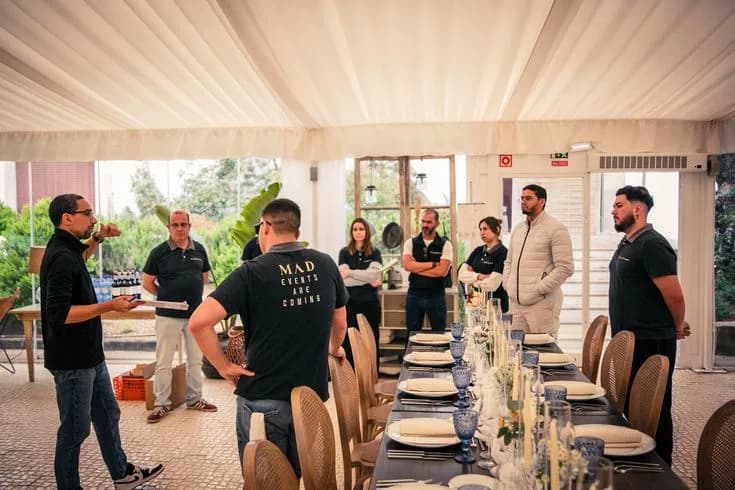
Consider an illustrative setup: the venue opens at 4 p.m., and the florist, sound team and caterer all receive the same arrival time. By 4:15, three trolleys need one lift, the tables remain in storage and nobody can place anything in its final position.
The problem is sequence, not headcount. Find the longest chain of tasks that must happen in order, then protect the lift, loading point, power check or room handover that controls it. More people cannot shorten a setup when everyone is waiting for the same resource.
Separate access from useful access
“Access from 4” can mean the front door opens at 4. It does not necessarily mean every vendor can begin useful work at that moment.
Ask what must happen before useful work begins. Security may need names or vehicle details. A goods lift may be shared. The venue team may still be clearing a previous layout. Booked rooms may open at different times, and noisy or messy work may have its own restriction.
Write two times on the run sheet: door access and work-ready room. If they differ, schedule against the second one.
The booking should include the full period from first entry to completed handover. The venue cost comparison should price those hours, not only guest time.
Find the dependency chain
A dependency is simple: task B cannot begin until task A is complete. The setup duration is controlled by the longest important chain.
Furniture before styling
Table linen, flowers, place cards and product displays depend on tables reaching their final positions. If the venue team moves furniture, confirm when that work begins and who approves the result. Decor teams arriving earlier cannot make a missing table appear sooner.
Power before technical checks
Audio, lighting, screens and recording equipment need safe, confirmed power and cable routes. The soundcheck depends on equipment placement. Rehearsal depends on soundcheck. Doors should not open while a critical technical chain is still unresolved.
Use a qualified provider for significant electrical requirements. A planning grid cannot assess electrical safety.
Cleaning before final styling
Some build work creates packaging, dust or floor marks. Final styling and guest-facing photography should follow the messy tasks, not compete with them. Decide who removes waste and when the venue conducts its last clean.
Identify shared bottlenecks
A bottleneck is a resource that several tasks need at once.
Common shared points include the loading stop, lift or stair, large-item doorway, trolley, ladder, preparation sink, technical sign-off, storage area and the venue contact who approves changes.
Walk these during the 30-minute recce. Ask what other building activity shares them during setup.
Protect the bottleneck
Give it a sequence. If sound cases need the goods lift before catering trolleys, put both in writing. Stage later arrivals away from the entrance. Give one person authority to change the order when a vendor is late.
Do not build a schedule that requires a vehicle, case or team to wait in a location where waiting is not permitted.
Build the ALTR setup dependency grid
Create one block for each task. The grid can live in a shared note or spreadsheet, but each line needs the same six fields.
- Task: Place workshop tables.
- Owner: Venue floor lead.
- Earliest start: After room handover.
- Depends on: Final layout approved and storage unlocked.
- Shared resource: Goods lift and two trolleys.
- Proof of done: Tables placed to dated floor plan.
Then add the next task: place table materials. It depends on the first and belongs to a different owner. Continue until doors open.
Mark the critical chain
Read each dependency from the end backwards. What must finish for guests to enter? What must finish for that task to begin? Continue until you reach access. That chain receives the clearest owners, earliest confirmation and largest sensible buffer.
Tasks outside the chain can still matter, but a delayed photo backdrop should not hold the doors if the event can run without it. A delayed soundcheck may.
Sequence vendors without collision
Send each vendor a smaller version of the run sheet with their arrival window, entrance, contact, loading method, working and storage zones, dependencies, handover and departure time.
Ask them to acknowledge the sequence, not only the call time. A vendor may know that your planned 20-minute task needs 45 minutes under the venue's access conditions.
Keep one coordinator responsible for the master clock. Vendors should not negotiate lift priority or room changes independently when those decisions affect other teams.
Reserve the calm final check
Setup is not complete when the last object arrives. Protect a final period with no planned build activity. Its length depends on the format, but its job stays consistent.
For the guest-view check, walk from entrance to the main room. Remove cases and packaging from sight, test the programme's first technical moment, check lighting, cooling, sound and food, then inspect routes and cable positions. Brief the greeter and photograph the approved room state if that will help the handover.
If the final check keeps disappearing, the dependency chain or booking window is too tight. Do not treat calm as a luxury. It is the period in which the team catches the problem a guest would otherwise find.
Plan pack-down as a reverse dependency
The event ends before the booking does. Some tasks still need an order: guests leave before large cases move through their route, food clears before tables fold, hired objects are counted before a courier departs.
Use the same six fields for pack-down. Confirm waste, cleaning, furniture reset, key return and damage checks. Name the person authorised to sign handover, and keep enough working time before the booking ends.
Compare venue access and setup requirements, then ask each host one operational question before discussing decor: “What has to happen between first access and a work-ready room?” Put every task in the answer above the first vendor's call time.