Your Event Starts at the Kerb, Not at the Registration Desk
Plan the last 100 metres, entrance, registration, queue and departure so guests and vendors can reach the venue without guesswork.
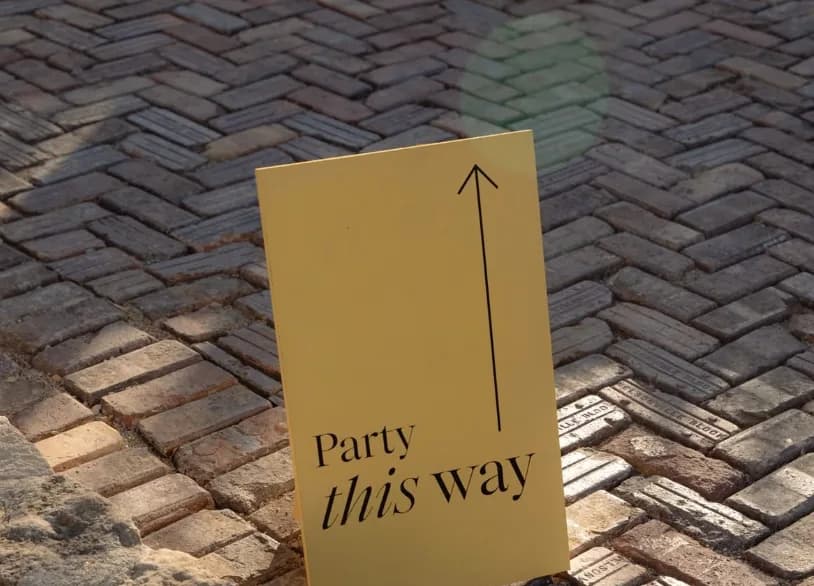
Event guest arrival planning starts before the venue door. Walk the last 100 metres from the likely drop-off or approach, then write directions for someone who has never seen the building. A pin locates a property. It may not reveal the correct gate, security desk, lift, floor or entrance. Those final decisions shape whether guests arrive settled or apologising.
Walk the last 100 metres
Do the walk under conditions that resemble the event when possible. Daylight, closed shops, building access and vehicle movement can change what a guest sees. Record the date and time of your check rather than treating it as permanent.
Start at the likely stop
Stand where a cab or car can legally and safely release a passenger, or where a person on foot first reaches the property. Do not assume the map pin is the drop-off point.
From there, note:
- The first visible landmark
- The correct gate or building entrance
- Any security or reception step
- Lift, stair or corridor route
- Floor and door identifier
- Where a guest can wait under cover
- Who can help if access fails
Take one entrance photograph from the guest's direction of approach. A close photograph of the venue door may be useless if the person cannot find the building gate.
Test after-dark visibility when relevant
If guests will arrive after sunset, check the route at that time or ask the host for current information. Signboards, building numbers and gates may be easier or harder to see. Confirm whether external signs or temporary wayfinding are permitted.
Avoid claiming the route is always safe, quiet or well lit. Describe the observed route and give guests a working contact.
Account for different arrivals
Guests and vendors do not approach a venue in the same way.
Cab and car arrivals
Ask where a vehicle can stop, how long it can remain and what happens when several arrive together. Separate drop-off from parking. If the property offers parking, confirm who can use it, whether spaces are reserved and what backup instruction applies when full.
Do not publish a fixed travel-time promise. Ask guests to check their route for the call time and share an arrival window rather than one exact minute when the programme permits it.
Public transport and walking
Give the station or stop only when you have verified the practical walking route. Include the exit, landmark and final turn that matter. Distance alone does not describe crossings, footpaths, stairs or building access.
Vendor vehicles
Vendors may need a different gate, earlier access or permission from building management. Confirm vehicle size, loading stop, lift and contact person. A guest direction card should not be reused as a vendor load-in note.
Guests who need step-free access or assistance
Trace the complete route from drop-off to the event area and washroom. Record ramps, lifts, thresholds and doors. Ask the guest what support would be useful without asking for more personal information than the plan needs.
Share accurate limitations early. “Accessible entrance” does not settle the rest of the journey.
Design the threshold
The entrance is a small decision point. A guest needs to know where to stand, who to speak to and what happens next.
Registration should not block entry
Place the guest-list check beyond the door swing and main path. Keep enough room for a person to pause without stopping everyone behind them. If bags, badges or security checks take time, move them away from the narrowest point.
Name the welcome team and give them authority to solve common exceptions. A list that only one organiser can interpret creates a queue whenever that person steps away.
Give the first minute a clear next action
After check-in, show guests where to put bags, find water, take a seat or join a conversation. A host greeting, one sign and a visible room can do more than several decorative arrows.
If early guests arrive before the main area is ready, agree on a holding point that does not expose setup or interfere with vendors.
Prevent the queue from becoming the event
Estimate arrivals in a window, not only total guests. Fifty people spread across 30 minutes and fifty people in five minutes require different thresholds.
The arrival-rate check
Use this simple planning asset:
- Choose the busiest likely five-minute window.
- Estimate how many guests may arrive in it.
- Time one normal check-in, including a name that is hard to find.
- Multiply the check-in positions by the people each can process in five minutes.
- If capacity is lower than likely arrivals, shorten the interaction, open another position or widen the arrival window.
This is a queue-planning estimate, not a guarantee. Test it with the real process.
Weather matters at the threshold. Ask where people wait if it rains and whether umbrellas, wet floors or bags reduce the available area. A covered step may shelter two people and still leave the queue exposed.
Write directions a first-time guest can use
Keep the guest note short enough to read from a phone while moving. Include:
- Venue and building name
- Map link
- Correct entrance or gate
- One useful landmark
- Floor, lift or stair instruction
- Arrival window
- Parking or drop-off note if confirmed
- Entrance photograph
- One event-day contact
- Any accurate access limitation or assistance arrangement
Send an update if an entrance, road condition or building instruction changes. Do not hide essential directions inside a long programme message.
Test the departure too
Guests may leave in a tighter wave than they arrived. Ask where pickups can wait, when the building closes and whether security changes the route later in the evening. Keep the exit clear while pack-down begins.
If the venue is difficult to identify from the road, give departing guests a pickup landmark. For a late finish, let guests know the exact programme end and venue departure time so they can plan their own journey.
Walk the whole route once in reverse. A door that was staffed on arrival may be locked or unmarked on departure. Confirm who remains responsible until the final guest leaves.
Compare the approach as well as the room
Two venues can support the same programme and create very different arrival work. Compare the correct entrance, last stretch, shelter, registration space, step-free route, vendor access and departure plan before paying. A community event can carry these details into the four-mode meetup plan. A temporary retail event should add them to the pop-up customer path, where deliveries and customer entry may need different routes.
Open ALTR's venue map to understand where live spaces sit, then verify the last 100 metres yourself or with the host. Save the entrance photograph and directions with the event plan. The room begins where the guest starts making choices, not where the organiser places the welcome desk.